Speech-Language Pathology Services

District Learning Support Services, Burnaby Schools

Welcome!

Welcome to the Burnaby School District Speech-Language Pathology Services website!

We hope this site will provide you with resources to support your child with his/her speech and language goals.  We invite you to explore the different pages on the top of the navigation bar. Whether your child is working on their articulation skills, language skills, social skills or learning to use their augmentative/alternative devices, you will find lots of information and links to useful resources in each of those areas.

As always, please feel free to contact your child’s speech-language pathologist if you have any questions or concerns.  We’re always happy to help and you can find our contact information on the “About” page.

We’re still building sections of our website so come back often for updated resources.  You can also subscribe to our site so that you will be notified every time we have updates.

Thanks for stopping by!
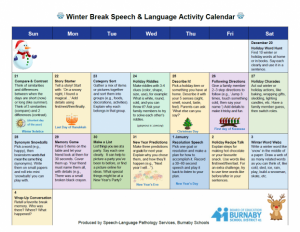
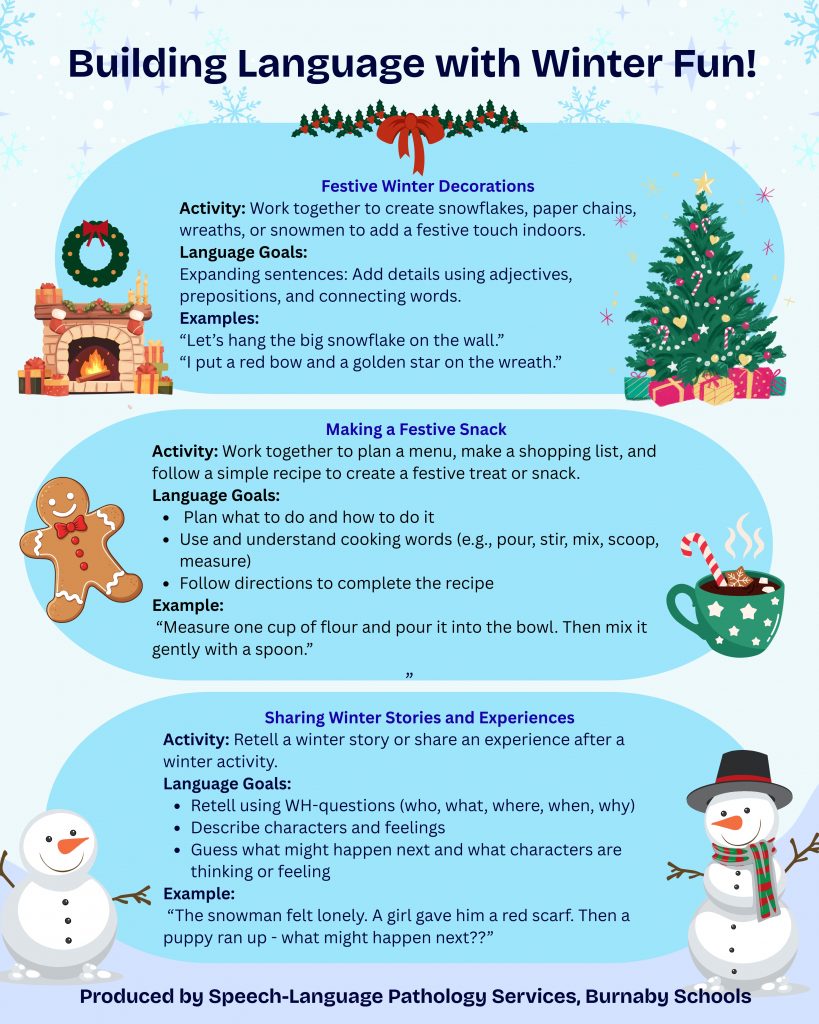
Building Language with Winter Fun!

As the days get colder and the season grows festive, children can enjoy hands-on activities that spark both creativity and communication. By using strategies like narrating, recasting, and expanding introduced in our last post, parents and educators can turn everyday moments into meaningful learning experiences.

From crafting and cooking to storytelling, these winter activities give children many chances to learn new words, build sentences, and share their ideas while having fun.

Be sure to check out the poster below for suggested activities and tips to support language skills.

Wishing you and your little learners a warm, joyful, and inspiring winter season!

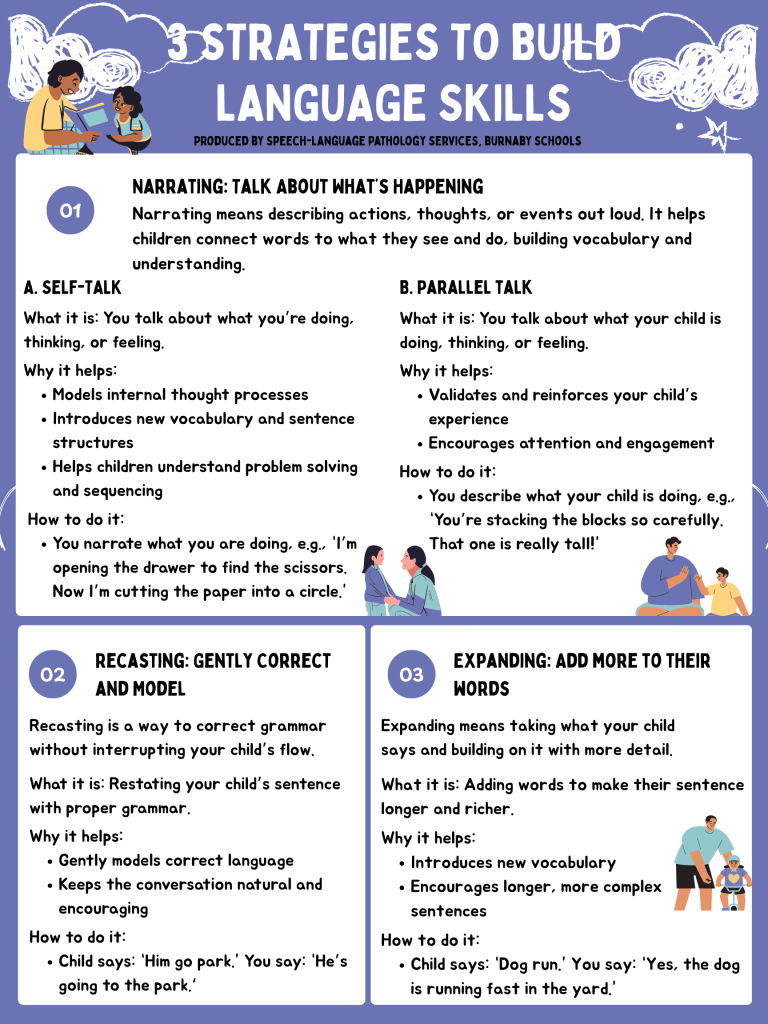
Strategies to build language skills

In our previous post, we talked about what Developmental Language Disorder (DLD) is and how it impacts communication. This month, we’re diving into something practical: three simple strategies families can use every day to build language skills naturally.

These strategies don’t require apps or worksheets. Instead, they’re all about how you talk with your child during routines, play, and quiet moments. The strategies below are especially helpful for children with DLD, but they’re great tools for building oral language in all learners. Check out this visual guide for quick tips you can start using right away:

Language growth happens in everyday moments. You don’t need to set aside special time for these strategies – they work best when woven into your everyday routines. Whether you’re cooking dinner, walking to school, or playing together, the words you use help your child’s language grow.

If you have questions or want more personalized ideas, reach out to your school’s Speech-Language Pathologist. We’re here to help! Together, we can make communication fun, natural, and part of your family’s daily life.

DLD Awareness Day – Grammar Skills Spotlight

DLD Awareness Day – October 17, 2025

Today is Developmental Language Disorder (DLD) Awareness Day! Developmental Language Disorder is a hidden, but common, disability that affects 1 in 14 people. DLD causes difficulties understanding and using language for no known reason. Try this quiz from RADLD to test your knowledge and learn more about DLD.

Grammar Skills Spotlight

Children with DLD may have more difficulty with grammar skills than their peers. Check out this handout to learn about expected grammar skill development for Kindergarten to Grade 3 students, as well as for information about spotting DLD in English Language Learners (ELL).

Loader Loading...
EAD Logo Taking too long?

Reload Reload document
| Open Open in new tab

Helping AAC Users Build Friendships in the Classroom 

So much of AAC instruction focuses on requesting, labeling, or sentence-building. These are important, but if we want students to connect with peers, we must also model greetings, jokes, comments, and conversation starters. Think:

  • “Hi, what’s your name?”
  • “That’s funny!”
  • “Can I play too?”
  • “Cool shirt!”

Use the student’s device to model these during real-life social moments — recess, snack time, group projects — and encourage others to do the same.

Pro Tip: Customize the device to have pre-programmed social buttons that are easily accessed. Modify the social page to contain socially appropriate phrases for the student’s age.

Include Emotion and Personality

AAC users need vocabulary that reflects who they are — not just what they need. I always encourage programming in favourite TV shows, silly phrases, personal opinions (“That’s boring!” or “I love pizza!”), and emojis or slang. Social connection grows when students can share themselves authentically.

Celebrate All Communication

Whether it’s a gesture, a glance at a symbol, or a full sentence from a device, all communication matters. Peers will follow the lead of the adults around them. When we slow down, give wait time, and treat AAC as a valid and natural form of interaction, we set the tone for inclusive friendship-building.

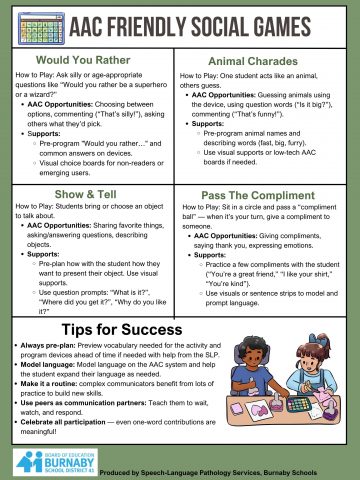
Check out some AAC Friendly Social Games to play and tips for success:

AAC Social Games – blog post (1)


Back to school: What’s on the agenda?

Welcome back to another school year, everyone!

A new year always brings about the opportunity for growth and learning for all: teachers, students, parents…everyone! Exposure to new things expands our thinking. It allows us to see different perspectives and possibilities, normalize differences, and challenge stereotypes, promoting greater understanding of ourselves and others.  When we think about creating inclusive classrooms (or being a member of any space that feels inclusive for us!), often something that is a required support for one person has the potential to be a helpful support for all people once they get a chance to see it and try it themselves.

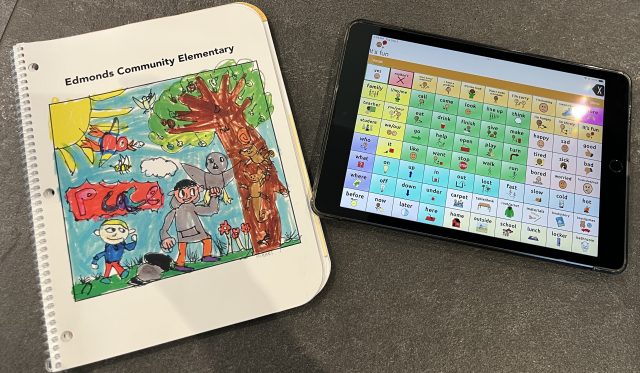
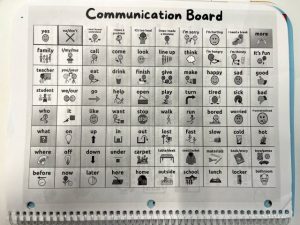
This year, Edmonds Community School has included a Communication Board in their school’s student agenda:

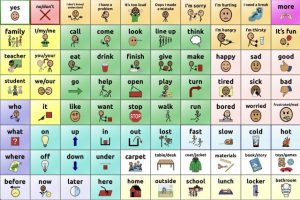
A Communication Board is a low-tech AAC (Alternative & Augmentative Communication) support that has frequently used vocabulary words. It can be used by an individual to point to what they want to communicate when oral speech is not coming easily. It can also support understanding in a conversation by adding visual information to what is being said. It can be especially useful for students who are non-speaking, who are learning a new language, who have difficulty with producing speech sounds accurately, or those who are experiencing big emotions and struggling to get their words out. It also can be an early literacy support by exposing pre-readers and early readers to the written form of words they know to hear and say but cannot yet read.

I encourage you to print a low-tech Communication Board for yourself or for your students to try as an extra support for communicating; what is necessary for some people can be helpful for many others too!

Happy learning and communicating this year!

Loader Loading...
EAD Logo Taking too long?

Reload Reload document
| Open Open in new tab

Download [1.82 MB]

Celebrating the End of the School Year and Embracing Summer Fun in Burnaby

As the school year draws to a close, students across Burnaby are eagerly anticipating the arrival of summer. This transition period offers a unique opportunity to reflect on the progress made throughout the year and to plan engaging activities that can help students continue developing their communication skills during the summer break.

Reflecting on Achievements

The end of the school year is a time to celebrate the hard work and achievements of our students. Whether it’s mastering new speech sounds, improving social communication, or enhancing language skills, each milestone is a testament to our student’s dedication and hard work at school. Take a moment to acknowledge these accomplishments, this positive reinforcement can boost their confidence and motivate them to keep practicing over the summer.

Summer Activities to Support Communication Skills

Summer in BC is filled with opportunities for fun and learning. Here are some activities that can help students maintain and develop their communication skills:

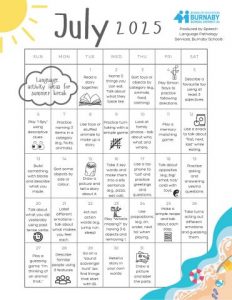
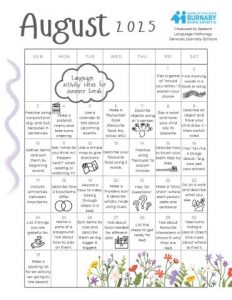
Ideas for daily language fun!

SLP Activities Calendar – July 2025

SLP Activities Calendar – August 2025


  1. Burnaby Community Summer Activities:  The City of Burnaby Recreation and Arts have a wide range of exciting summer activities. You’re sure to find something unique for you and your student!
  2. Outdoor Adventures: Families are encouraged to explore local parks, beaches, and hiking trails. These outings provide a natural setting for practicing descriptive language, storytelling, and social interactions.
  3. Community Events: Many communities host summer festivals, fairs, and markets. Participating in these events can help students practice conversational skills, learn new vocabulary, and engage in social exchanges.
  4. Reading Programs: Local libraries often offer summer reading programs for children. Joining these programs can enhance literacy skills, expand vocabulary, and foster a love for reading.
  5. Creative Arts: Activities like drawing, painting, and crafting can be great for developing fine motor skills and encouraging expressive language. Students can describe their creations, tell stories about them, or even create a summer scrapbook.
  6. Sports and Games: Team sports and group games are excellent for practicing turn-taking, following instructions, and using social language. Whether it’s soccer, baseball, or a simple game of tag, these activities promote physical and communicative development.

Tips for Parents and Caregivers

Continue reading

May is Speech & Hearing Month

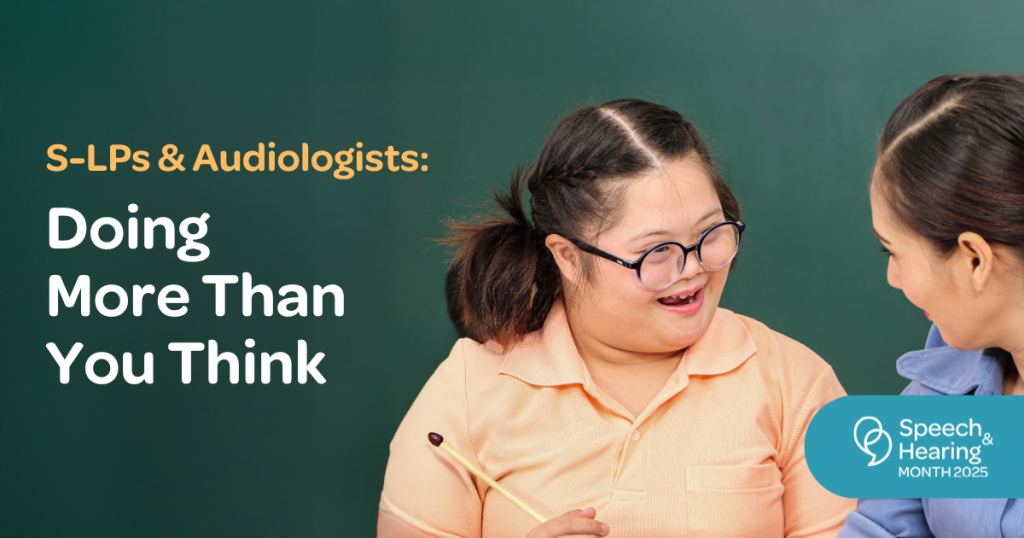
May is Speech & Hearing Month. Speech-Language & Audiology Canada (SAC) dedicates the month of May to raising public awareness about communication health. The 2025 theme, “S-LPs & Audiologists: Doing More Than You Think”, highlights the vital yet often overlooked role of S-LPs and audiologists. From helping stroke survivors regain speech to supporting those with tinnitus, these professions provide life changing care.

In schools, S-LPs work with students to strengthen their communication skills — from building speech sounds and language to developing social communication and supporting alternative ways to communicate. By partnering with students, families, and school teams, S-LPs help students build confidence and succeed both in school and in everyday life.

This month, let’s recognize the power of communication and the many ways it helps us connect, learn, and grow.

To access resources, learn more, and spread the word, visit: http://speechandhearing.ca.

April is Autism Acceptance Month

Autism Acceptance Month is a time to recognize and celebrate the unique strengths and perspectives of individuals on the autism spectrum. Acceptance goes beyond just knowing about autism—it’s about creating environments where autistic individuals feel valued, included, and understood.
Want to know more? Check out our previous blog:
Let’s take this month as an opportunity to listen, learn, and grow together. 💙

Articulation Workshop 2025

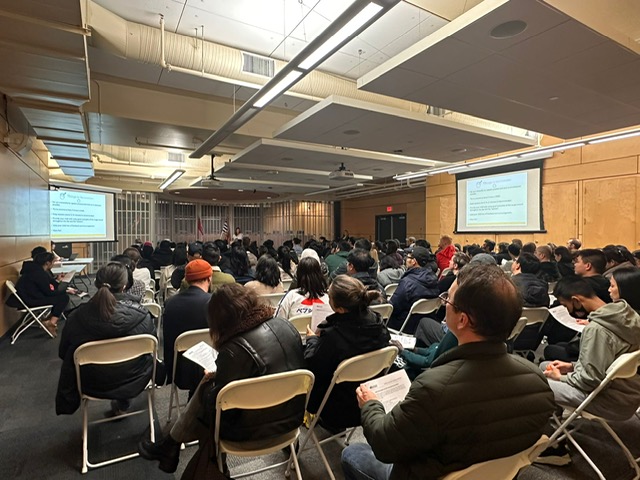
Thank you to the parents and caregivers for joining us at yesterday’s articulation workshop. We were excited to see a full house!

We hope you enjoyed the workshop and learned some helpful tips. This is the beginning of a fun speech journey and we encourage you to practice the techniques and activities we explored together. Practicing speech sounds can be enjoyable and stress-free with a few fun activities and a bit of imagination. Remember, every small step counts, and your consistency and support makes all the difference!

We hope you and your child will have a blast with speech practice. Don’t forget to check out the Articulation section of this blog for more ideas and resources. If you have any questions, please reach out to your school’s speech-language pathologist. We are here to support you.

Happy practicing!
« Older posts