


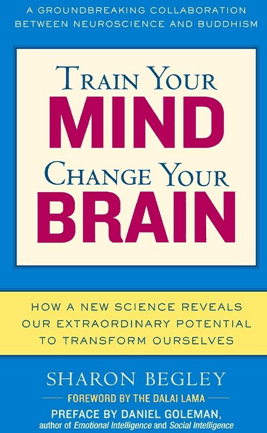
 Sharon Begley is a Newsweek science writer who has a gift for making science accessible and meaningful. This book is a compiled set of learning stories from the Mind and Life Institute conferences (participated by the Dalai Lama and a group of neuroscientists). Pioneering research in neuroplasticity from many sides are brought together – works such as Michael Merzenich, Paula Tallal, Fred Gage, Richard Davidson…
Besides the story on Fast ForWord, I was intrigued by Philip Shaver’s story on prosocial behaviour (compassion, empathy, altruism…). He suggests that whether a person acts with compassion or not reflects the person’s sense of emotional security (eg. whether they know there is someone to turn to in tough times). This bridges to Attachment theory where having emotional security or not explains why different children react differently to situations. Those experiences early in life extend into adult life. There is growing evidence that interventions to enhance emotional security also help grow compassion. If we combine this with our understanding of how the brain needs attention and experiences to change and that this is possible throughout life (plasticity), then we have another level of conversation. Especially when we’re talking about social responsibility or Restitution practices, which our district is strongly in support.
Another one that stood out was Fred Gage’s work on results on voluntary and involuntary exercise. Voluntary exercise (eg. running, swimming) promoted neurogenesis. When this happened, there was also the presence of theta waves in the brain (like when you pay attention to something). Theta waves aren’t present during activities of eating, drinking or other things of an autopilot nature. As theta waves can also occur without physical activity, there is a suggestion that the voluntary component could be a key to the increase in neurogenesis. I wonder if this is suggesting that its another plus for leading an active life. …. get out those running shoes!….
Ultimately the book gives hope; hope that through attention and experiences the brain changes and that it’s not all genes (Schwartz proved that with his strategies for patients with OCD); hope that neuroplasticity provides an answer to our aging memories and the host of health related issues associated with age; hope that we can do something about it. The question for us as educators, may be ‘what might we do with all this growing body of evidence’?